
Effective NATO English: Enhancing your precision and influence
Swedish officers generally have a strong command of English, but what can a two-day course in NATO English truly offer? “When you, as a staff officer, deliver a verbal briefing to a senior commander, your message must be concise and precise. The course 'NATO English for Military Planners' focuses on familiarizing you with the terminology used in NATO staff work to convey your message effectively,” explains Jacqueline Anwar, English language instructor at the Swedish Defence University.

The 'NATO English for Military Planners' (NEMP)
The NEMP course, conducted at SWEDINT, is geared toward staff officers and those at higher tactical levels, emphasizing advanced operational planning.
“We concentrate on mission analysis and the presentation of courses of action (COA). Our program emphasizes identifying key terms relevant to military planning, with the goal of enhancing officers' vocabulary so they can confidently deliver briefings to senior commanders,” Anwar adds.
The importance of advanced language skills in NATO operations
Effective communication in English is essential for military staff officers operating within multinational NATO environments. It fosters interoperability and cooperation with partner nations during mission analysis, planning, and coordination. The NEMP course was developed after SWEDINT began running the NATO Land Tactical Planning Course (NLTPC). Swedish officers attending the NLTPC recognized the need to refine their use of NATO terminology and improve their ability to convey concise analysis and recommendations in formal briefings.
The NLTPC is a two-week NATO-accredited course based on the APP-28 planning method, conducted entirely in English with participants from around the world. The course involves higher tactical planning in syndicates and concludes with mission analysis briefings to senior commanders and a final COA Decision briefing to a three-star general.
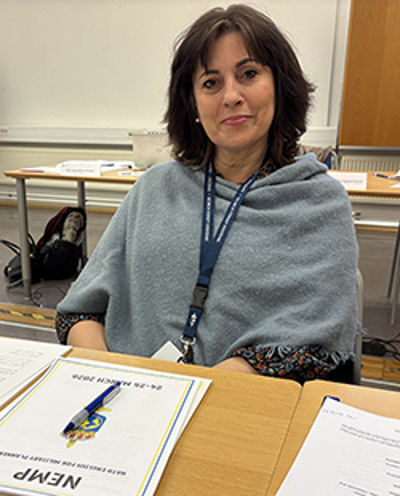
“Delivering such briefings requires precise military language and formal phrasing, which our Swedish student officers at the Defence University often find challenging. A NATO military commander must effectively frame ideas and viewpoints in English to build cohesive multinational planning teams,” Jacqueline notes.
While Swedish officers typically have strong English skills, achieving full fluency requires the use of context-specific terminology. As an officer on a NATO staff, you need to collaborate across different branches and specialties at a joint level and learn to use English flexibly. This involves understanding and navigating the various lexicons within a NATO headquarters and reframing your message for different audiences, whether addressing higher commanders, legal advisors, political advisors, or your own subordinates.
“We are discussing a highly advanced level of language proficiency that encompasses not just effective briefing skills but also the ability to negotiate your ideas within a team,” Jacqueline emphasizes. Research has shown a clear link between effective spoken fluency and successful team leadership, indicating that professionals who struggle to articulate their thoughts concisely may exert less influence and have a diminished impact on decision-making.
To retain the skills gained in the NATO English course, Jacqueline suggests ongoing practice in professional spoken and written English. This includes reading NATO-related literature and listening to relevant podcasts. For those intending to work on NATO staffs, attending the NLTPC shortly after completing the English course is highly recommended. Student officers receive tools and resources to verify terminology, but individual effort and commitment are essential for long-term improvement.
“Language is like a muscle—it requires regular training and development,” Jacqueline concludes.
Course Details
The NATO English for Military Planners course is conducted over two days at SWEDINT in Kungsängen, twice a year. The next session will occur in autumn 2026, with specific dates yet to be announced.
This language course primarily targets Swedish military officers who are non-native English speakers at levels OR 8/9 and OF-3 to OF-5, although exceptions may apply. Participants should be experienced military planners who can focus on language use rather than the planning process itself. While native speakers and civilians may attend as observers, they cannot participate.
Over the two days, participants engage in exercises using NATO tactical and operational planning terminology derived from APP-28, COPD, and relevant Allied Joint Publications. Based on a military planning scenario, participants practice terms while planning a COA Decision briefing, culminating in presentations to senior commanders followed by instructor feedback. Finally, groups produce a written brief in accordance with NATO standards as a record of the first day’s briefing, aiming to develop effective military writing style.