
The Drone Warfare Awareness Course
The Ukrainian International Peacekeeping and Security Centre, in a collaboration with SWEDINT, recently delivered a pre-pilot of the Drone Warfare Awareness Course (DWAC). In the course of a week, instructors from IPSC went through everything from how drones have affected Ukrainian warfare to the organisational changes drone warfare has brought, all based on Ukrainian experiences and lessons learned from the ongoing war with Russia. The course aims to strengthen NATO capability development.

The Drone Warfare Awareness Course
“It is invaluable that it is Ukrainian first-hand information, it has not been interpreted by anyone other than those who practice this kind of warfare.”
“For operations analysts and those involved in concept development, this course is gold. The scenario descriptions we have had are extremely valuable takeaways.”
These are two quotes from participants at the DWAC pre-pilot, their sentiments echoed by many others about the Ukrainian course, just recently delivered at SWEDINT.
The DWAC was developed by IPSC, with LtCol Oleh Meder serving as the Course Director.
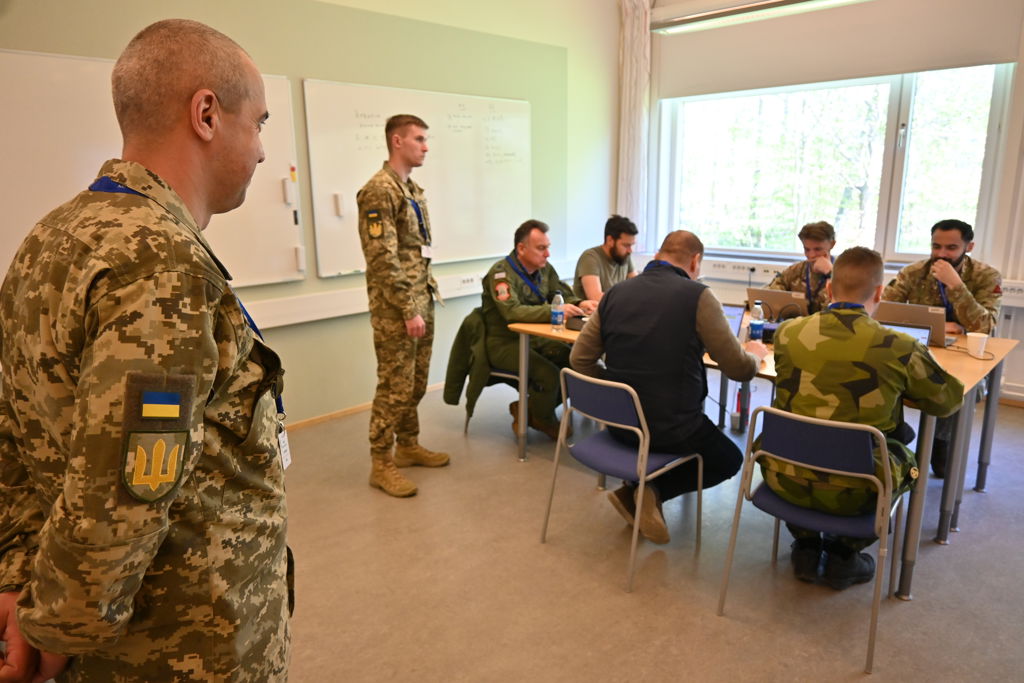
“The drones play a huge role now, in modern warfare”, says LtCol Meder. “From our experience, drones have greatly improved battlefield awareness, precision, survivability, command and control, and operational tempo. Understanding their role and significance is essential for NATO’s future planning and force development - this is the aim of our course.”
The target audience is NATO personnel, particularly at tactical level; staff at Headquarters; staff in Joint Task Forces; at division, corps, brigade and battalion levels. In accordance with NATO standards, course participants are taught about the impact that drones have on each joint function; Command and Control, Intelligence, Fires, Force Protection, Sustainment and Maneuver.
“We discussed tactical drones at the frontline and the capabilities they provide across different joint functions.”
Drones are relatively inexpensive compared to many other weapons systems. Where an air-to-air missile may cost over 200 000 dollars, a Ukrainian P1-SUN interceptor drone, for example, just costs a few thousands. When countering a large number of deep-strike drones, that becomes important.
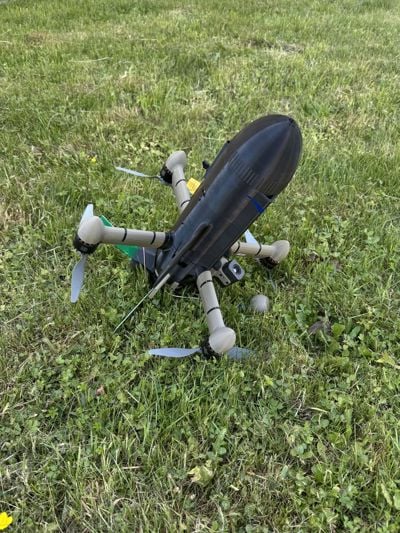
Captain Toby Cox, Drone Platoon Commander in the British Army, was one of the DWAC participants. He was impressed by the course, and particularly looking at the innovation that has happened since the Russian full-scale invasion in 2022 up until now.
“It is a really worthwhile course, seeing what our Ukrainian partners are doing”, says Captain Cox. “It’s amazing how many traditional roles which are being done by drones or AI systems that the Ukrainians have developed. How quickly they have got the intelligence cycle down. Whereas you earlier had an Intelligence platoon looking at all the HUMINT, SIGINT, OSINT et cetera, and then working through that, they now have a system which does it autonomously within seconds, and can designate targets and feed it back.”
In a few weeks’ time, the pilot course will be underway. “We are very happy with the course so far. There are a few suggestions for improvement but the immediate feedback from our NATO partners was very positive”, says LtCol Meder.
The DWAC pilot will be delivered at SWEDINT later this summer, and evaluated by NATO for possible certification as a NATO Selected Course.