
Integrating Gender Perspectives in NATO exercises
“The main objective for me is to convince more people of the importance of protecting all individuals in peacekeeping operations and conflict, regardless of gender or age,” says Major Wilco van den Berg during NATO exercise STEADFAST DETERRENCE 2026.

After more than four years at NCGM in Sweden Major Wilco van den Berg says he will miss the dynamics of NATO exercises, where personnel from different disciplines, civilian and military experts meet. “I love doing this; the international setting, different cultures and trying to figure out where we have common ground”, van den Berg says at STDC26.
Photo: NATO Joint Warfare CentreIntegrating Gender Perspectives
More than a thousand personnel from all 32 NATO nations gathered at the Joint Warfare Centre in Stavanger to conduct one of NATO’s most significant strategic and operational-level exercises. Deep inside the mountain facility at Jåtta, uniforms, languages, and cultures from across the Alliance came together with a common purpose: ensuring NATO forces remain prepared to respond rapidly and effectively to any threat.
Support at strategic, operational and tactical level
Major van den Berg represents the Nordic Centre for Gender in Military Operations (NCGM), where he serves as a Subject Matter Expert on operations and exercise planning. In this role, he supports several major NATO exercises each year, including exercises at both strategic, operational, and tactical levels. The centre’s mission is to ensure the integration of gender perspectives throughout military operations.
A key part of that work involves contributing to exercise planning and scenario development. NATO exercises follow carefully designed storylines intended to meet specific training objectives, and van den Berg participates in scripting workshops where realistic “injects” are developed for the training audience.
“The injects must be realistic and coordinated,” he explains. “I usually begin with 10 to 15 injects, which are then adjusted according to the dynamics of the exercise and how events develop.”
Growing awareness among commanders
After more than four years with NCGM, van den Berg has observed growing awareness among commanders of the importance of integrating gender perspectives into military operations. He stresses that misconduct, exploitation, and abuse are not only ethical failures but operational risks that can damage NATO’s reputation, undermine relationships with local populations, and weaken societal cohesion within Allied nations.
Because gender perspectives cut across all aspects of military operations, they must be integrated into individual education and training, collective training, and exercises.
Although NATO acknowledges Sexual Exploitation and Abuse (SEA) as a genuine operational issue, many nations remain hesitant to engage fully with such scenarios during exercises. According to van den Berg, this reluctance risks missing critical learning opportunities.
“All NATO nations must commit to exercising SEA scenarios in order to ensure preparedness and uphold NATO’s zero-tolerance policy,” he says.
He emphasizes that scenarios involving abuse against men, women, boys, and girls are essential for building awareness and ensuring forces understand how to respond appropriately.
“It is about abuse of power in all forms,” he explains. “If I ask a cleaner at a deployed facility to clean my private house, that is also abuse of power, because the person may fear consequences if they refuse.”
Still a sensitive subject
One of the key lessons learned from supporting STEADFAST DETERRENCE 2026 has been the need for more workshops and discussions during exercises focused on Gender-Based Violence, including Sexual Exploitation and Abuse and Conflict-Related Sexual Violence.
“We know these things happen in conflicts and during troop movements,” van den Berg says. “But it is still a sensitive subject. Although participants are often willing to engage with these injects, some headquarters still do not allow them.”
He stresses that the purpose of these scenarios is not to shame or blame any nation or individual, but to ensure military personnel understand the reporting procedures, command responsibilities, and protective measures required if such incidents occur.
“When discussing the injects, I emphasize that this is about learning the process, being prepared, and knowing what measures to take if it happens,” he says. “And we know that in conflict, it does happen. And even in peacetime.”
NATO zero-tolerance policy
Some nations, however, have demonstrated strong willingness to engage with these difficult but necessary training scenarios. In the now completed STDC26, a full SEA case was played out involving the nation where the incident occurred, the nation whose personnel committed the offence, and the relevant NATO headquarters. Formal reporting procedures were then exercised through the chain of command, including official communications from the Chief of Defence and NATO’s Military Representative at SHAPE.
“That is how it is supposed to be reported,” van den Berg explains. “It then becomes the responsibility of the respective nation to determine what actions are taken regarding the personnel involved.”
He concludes with a reminder of NATO’s commitment:
“NATO has a zero-tolerance policy on sexual exploitation and abuse.”
And to borrow a quote attributed to Richard Clarke, the former U.S. national coordinator for security and counterterrorism: “If you do not prepare for the unexpected, the unexpected will surprise you.”
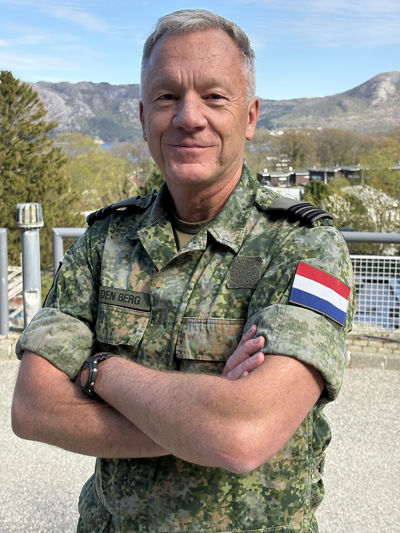
“I think my background in Human Resources as well as my experiences from deployments in Bosnia and Herzegovina, South Sudan and Mali have contributed to my convictions regarding gender perspectives in military operations. Having raised two daughters also gives gender based insights on a personal level, says Major Wilco van den Berg. His next position will be as Gender Advisor for the Netherlands Joint Force Command.
Photo: Paula Levänen