
Gendered disinformation: A hidden threat to democracy
As Sweden approaches its parliamentary election, it is worth asking a simple but essential question whenever we encounter information on social media: Is this true? False and misleading content spreads rapidly across digital platforms. But not all disinformation is designed to deceive in the same way. Some campaigns deliberately exploit existing prejudices and social norms, using gender stereotypes to shape public opinion, discredit individuals, and silence critical voices. This phenomenon is known as gendered disinformation, and it goes far beyond the spread of false information.

Hartono Creative Studio from Pixabay.
"Gendered disinformation is the deliberate use of false, misleading, or manipulative information that exploits gender stereotypes to influence opinions, emotions and behavior," says Iryna Lysychkina, Ph.D and Associate Professor at NATO DEEP eAcademy. "It often targets women in public life, but its ultimate objective is much broader: to shape public perceptions, undermine trust, and influence democratic decision-making."
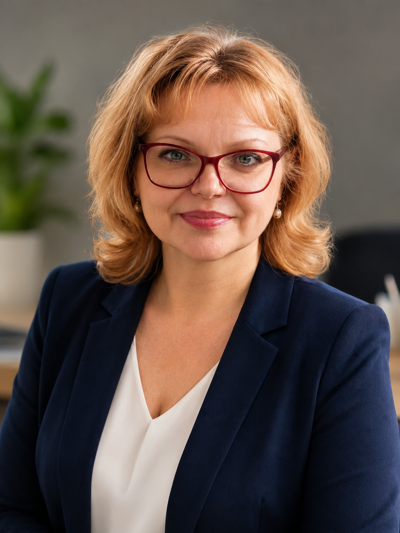
Iryna Lysychkina, Ph.D.
Photo: Olha LysychkinaThe Nordic Centre for Gender in Military Operations (NCGM) conducted the annual NATO key leader seminar on gender for flag officer level leaders, both military and civilian earlier this summer. Through briefings, round table and panel discussions the seminar focused on how to implement gender perspectives in military operations, missions and activities, and how this can contribute to the achievement of the overall political, military strategic and operational objectives. The theme this year was gender perspectives in strategic communication – including gendered disinformation. Iryna Lysychkina was one of the experts speaking.
“Unlike general online harassment or propaganda, gendered disinformation weaponises ideas about gender and social roles. While it may be accompanied by trolling, harassment, or coordinated propaganda, it attacks people not only for what they do, but for who they are as women or men. By exploiting deeply rooted stereotypes, these campaigns make manipulation more persuasive”, says Iryna Lysychkina.
Women are frequently portrayed as overly emotional, incompetent, excessively ambitious, unfit for leadership, or successful only because of personal relationships rather than merit. In wartime contexts such as Ukraine, women may also be depicted as incapable of military service or reduced to symbolic figures instead of recognised as professionals. Such narratives are designed to undermine credibility and diminish professional achievements.
“The immediate goal of gendered disinformation is often to damage reputations and silence voices. Its broader purpose, however, is to deepen social polarisation, discourage participation in public life, and weaken democratic resilience. In wartime Ukraine, these campaigns may also seek to undermine national unity and public support for the country's defence”, says Iryna Lysychkina.
How can we recognise gendered disinformation?
Legitimate criticism focuses on actions, decisions, and evidence. Gendered disinformation, by contrast, shifts attention to characteristics unrelated to professional performance, such as appearance, age, family status, or private life.
Another warning sign is coordinated amplification. The same narrative may suddenly appear across multiple social media platforms, anonymous accounts, and media outlets, creating the false impression of widespread public consensus. Although the specific narratives vary, the underlying mechanisms remain remarkably similar across countries.
"The tactics are global, but the narratives are local," says Iryna Lysychkina. "Disinformation campaigns exploit whichever stereotypes are most powerful in a particular society."
A recent example from Ukraine
A recent case illustrates how gendered disinformation operates in practice.
In May 2026, the appointment of Anna Dorosh as Chief of Protocol at Ukraine's Ministry of Health triggered widespread online debate. Initial social media posts and media reports described her as a "20-year-old girl" lacking the qualifications for the role. Subsequent reporting painted a very different picture. Dorosh was 25 years old, held a master's degree in political science, had previous government experience, and met the formal requirements for the position. Nevertheless, much of the public discussion continued to focus on her age, appearance, and alleged family connections rather than her qualifications and professional record.
“The case demonstrates how attention can be deliberately diverted from competence to stereotypes, shaping public perception before accurate information gains traction. Those seeking to weaken democratic societies benefit most from these narratives. When public trust declines, social cohesion weakens, and citizens make decisions based on fear, prejudice, or misinformation instead of evidence, hostile actors gain influence. Gendered disinformation is therefore not simply an attack on individuals — it is an attack on democratic resilience itself”, says Iryna Lysychkina.
Responding to the challenge
There is no single solution to gendered disinformation according to Iryna Lysychkina. Effective responses require a combination of:
-stronger media literacy;
-independent journalism;
-greater accountability from digital platforms;
-improved digital security; and
-strategic communication that promotes factual, evidence-based narratives.
Countering gendered disinformation is not only about correcting false claims. It also means challenging the stereotypes that make those claims persuasive and ensuring that authentic voices are heard.
An evolving threat
Public awareness of disinformation is growing. At the same time, technological developments are making the challenge increasingly complex. Artificial intelligence now enables false or misleading content to be produced more quickly, personalised more effectively, and distributed at an unprecedented scale. As our understanding of disinformation improves, so do the tools used to spread it. Increasingly, AI-enabled disinformation and strategic communication are discussed in the context of cognitive warfare — the effort to influence how people think, perceive reality, and make decisions. Gender stereotypes have existed for centuries, but social media and AI allow these narratives to be amplified and spread globally within minutes.
What can each of us do?
Every individual can help reduce the impact of gendered disinformation. Before sharing emotionally charged content, take a moment to verify it through reliable sources. Ask whether a story is based on evidence or whether it relies on stereotypes, personal attacks, or sensationalism. Challenge narratives that judge people according to their gender, appearance, or private lives instead of their competence and actions.
“Cognitive warfare succeeds when emotional reactions replace critical thinking. Democratic societies should not leave an information vacuum. Strategic communication matters because the first narrative people encounter often has the greatest influence. Promoting narratives grounded in democratic values, equality, and factual reporting helps build resilience against manipulation and reduces the space in which hostile disinformation can flourish” says Iryna Lysychkina.
Link to NATO Defence Education Enhancement Programme (DEEP)