
From Student to Syndicate Leader: An Irish First at NCGM’s NATO Gender Advisor Course
For the first time in the history of NCGM’s NATO Gender Advisor Course, an Irish syndicate leader has joined the instructor team – bringing with him the valuable perspective of having been a student on the course only months earlier.

"We had a really good mix of experience on the course and we gained a lot of insights from students and syndicate leaders sharing their experience. For me that is the key strength of the GENAD Course", says Commandant John Quinn.
Commandant John Quinn, currently serving as a Gender Advisor at Irish Defence Forces Headquarters, completed the NATO Gender Advisor Course at NCGM in April 2026. His contribution as a student made such a strong impression that the Course Director invited him to return to NCGM – this time as a syndicate leader.
“I felt my recent experience as a student would bring a useful perspective to the wider group of instructors,” says John Quinn. “NCGM invests a lot of time and energy into making the course relevant and engaging, and I was keen to be part of that. I also recently completed a Professional Diploma in Coaching and Mentoring, so this was an opportunity to put some of those new skills into practice.”
Creating space for discussion
Syndicate leaders play an important role throughout the course. Their task is not simply to provide students with answers, but to create a positive learning environment where participants can explore, discuss and debate what they have learned during lectures.
For this iteration, the syndicate leader team brought together experience from Ireland, the United States, Denmark and Australia.
“NCGM gathers a huge array of external lecturers who are experts in their fields, and the syndicate discussions and tasks are a great way to share knowledge and insights,” says John Quinn. “As a syndicate leader, I am not there to provide the answers, but to ask questions and facilitate a lively discussion.”
That exchange of perspectives is particularly valuable on a course with such an international group of participants. The third iteration of the NATO Gender Advisor Course this year brought together students representing 18 different nationalities, from Botswana and Brazil to Australia.
From knowledge to influence
During the course, students first build a clear understanding of Gender in Military Operations and the key concepts and terminology a Gender Advisor needs to master. This foundation is essential, as graduates are expected to serve as subject matter experts within their respective organisations.
But technical knowledge is only part of the role.
Communication is therefore a recurring focus throughout the course. Students are given opportunities to practise advising commanders and influencing staff in order to incorporate the gender perspective into the planning and conduct of military operations.
“It was really rewarding to see the confidence and depth of knowledge that students achieved over such a short time,” says John Quinn.
Confronting difficult realities
The course also addresses some of the most challenging aspects of the Women, Peace and Security agenda and Gender in Military Operations, including conflict-related sexual violence and sexual exploitation and abuse.
For Gender Advisors and military forces operating in conflict environments, understanding these issues and their consequences is critical.
“This is a really challenging aspect of the work of GENADs and military forces in a conflict,” says John Quinn. “We heard numerous case studies that illustrated the devastating effects these forms of violence can have. By hearing from experts, both civilian and military, the course gained valuable insights and a deeper understanding of this area.”
The combination of expert lectures, practical exercises and syndicate discussions is designed not only to provide students with knowledge, but also to prepare them to apply that knowledge when advising commanders and working within military staffs.
For Commandant John Quinn, returning to NCGM so soon after completing the course himself also reinforced another important lesson for future Gender Advisors: the value of professional networks.
“As a Gender Advisor, you are not alone. Build networks that can support your work and find leaders who can champion the gender perspective. There are so many people who see the value of the work we do and want to help.”
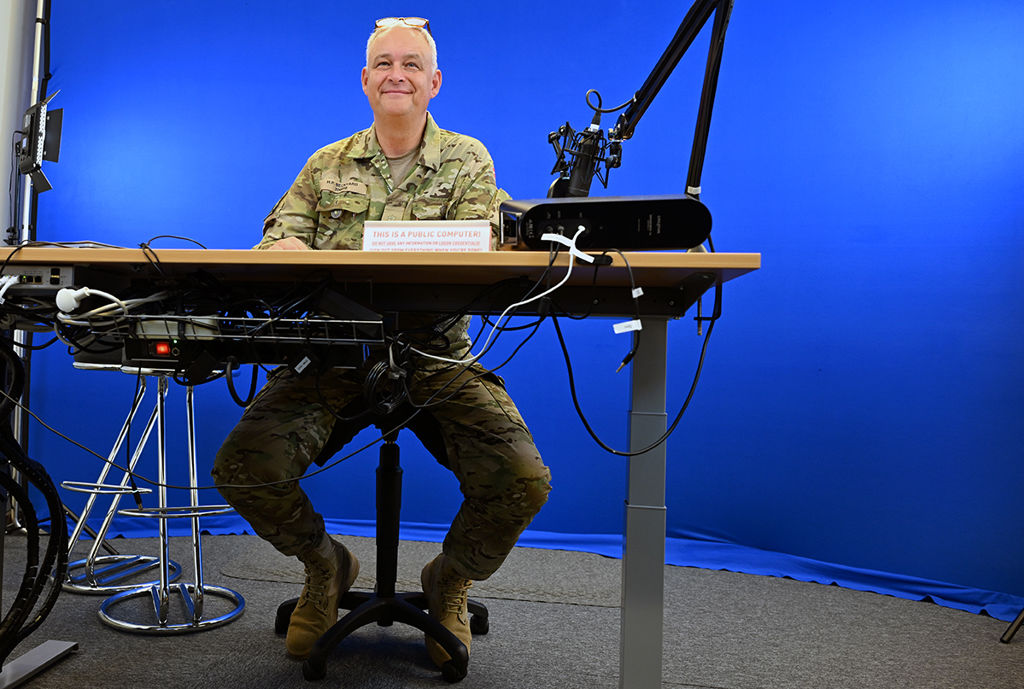
"This is an important step for NCGM in our efforts to further develop our international partnerships", says Course Director LtCol Henrik Beckvard about Commandant John Quinn joining the GENAD course as syndicate leader. I am impressed with the knowledge and skills that John and Ireland contributed with during this iteration of the GENAD course. I have great hopes for our future collaboration.