
From Standards to Practice: Advancing Gender Training Together
NCGM and RACVIAC have been collaborating closely since 2014. RACVIAC and the Armed Forces of the Republic of Croatia have once again partnered with the Nordic Centre for Gender in Military Operations (NCGM) to deliver the 14th iteration of the Gender Training of the Trainers Course (GToT).

RACVIAC is a security cooperation centre that primarily focuses on facilitating collaborative efforts on security related issues in the South-Eastern European region. The Gender Training of Trainers (GTOT) Course is a direct result of continued cooperation between NCGM, the Armed Forces of the Republic of Croatia and RACVIAC.
Photo: RACVIACThis year’s course brought together 26 participants from Albania, Bosnia and Herzegovina, Croatia, Greece, Montenegro, North Macedonia, Türkiye, Germany, Hungary, the Netherlands, and the Crisis Management and Disaster Response (CMDR) Centre of Excellence from Bulgaria.
Building on NATO-approved course documents developed by NCGM, as well as lessons learned from similar courses conducted since 2014, this course is designed to provide participants with knowledge, skills and competencies necessary to plan, conduct and evaluate gender-related education and training activities and integrating the gender perspective within their respective functional areas in both national and international contexts.
The team of instructors was led by course director Ms Nura Mulavdić (BA) and consisted of four syndicate leaders: LtCol Goran Boroš (HR), LtCol/Dr Aleksandar Grizhev (MK), Maj Anssi Yrjölä (FI, Rtd) and MSG Marija Horvat (HR).
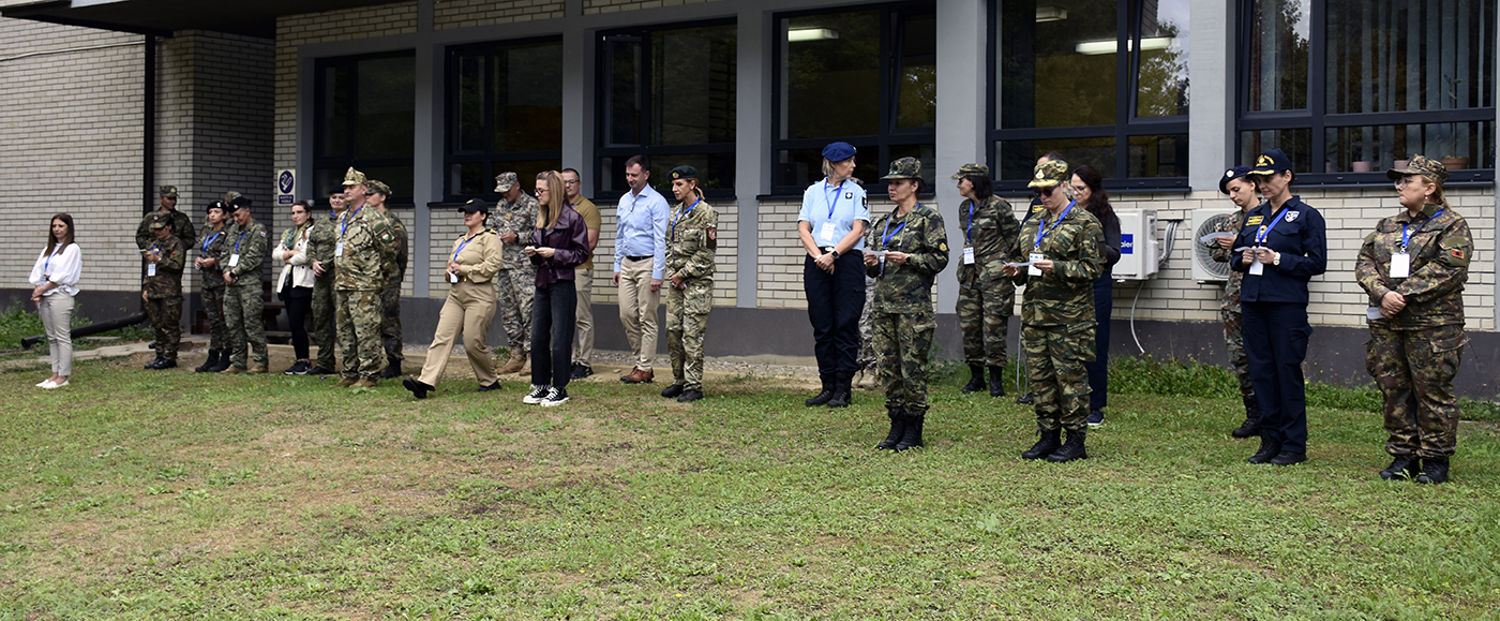
A power walk exercise to explore gender biases and stereotypes — and to gain a better understanding of your own.
Photo: RACVIACDr. Aleksandar Grizhev, associate professor and head of the Department of Social Sciences and Humanities at the Military Academy “General Mihailo Apostolski” in Skopje, supports this year’s iteration of GToT as an instructor and a syndicate leader.
– I was also involved in the GToT in 2024 in the same two roles, so it is interesting to return to the course and now see it in this pilot iteration (new test version of the course), when we are also looking critically at what works well and what may need adjustment.
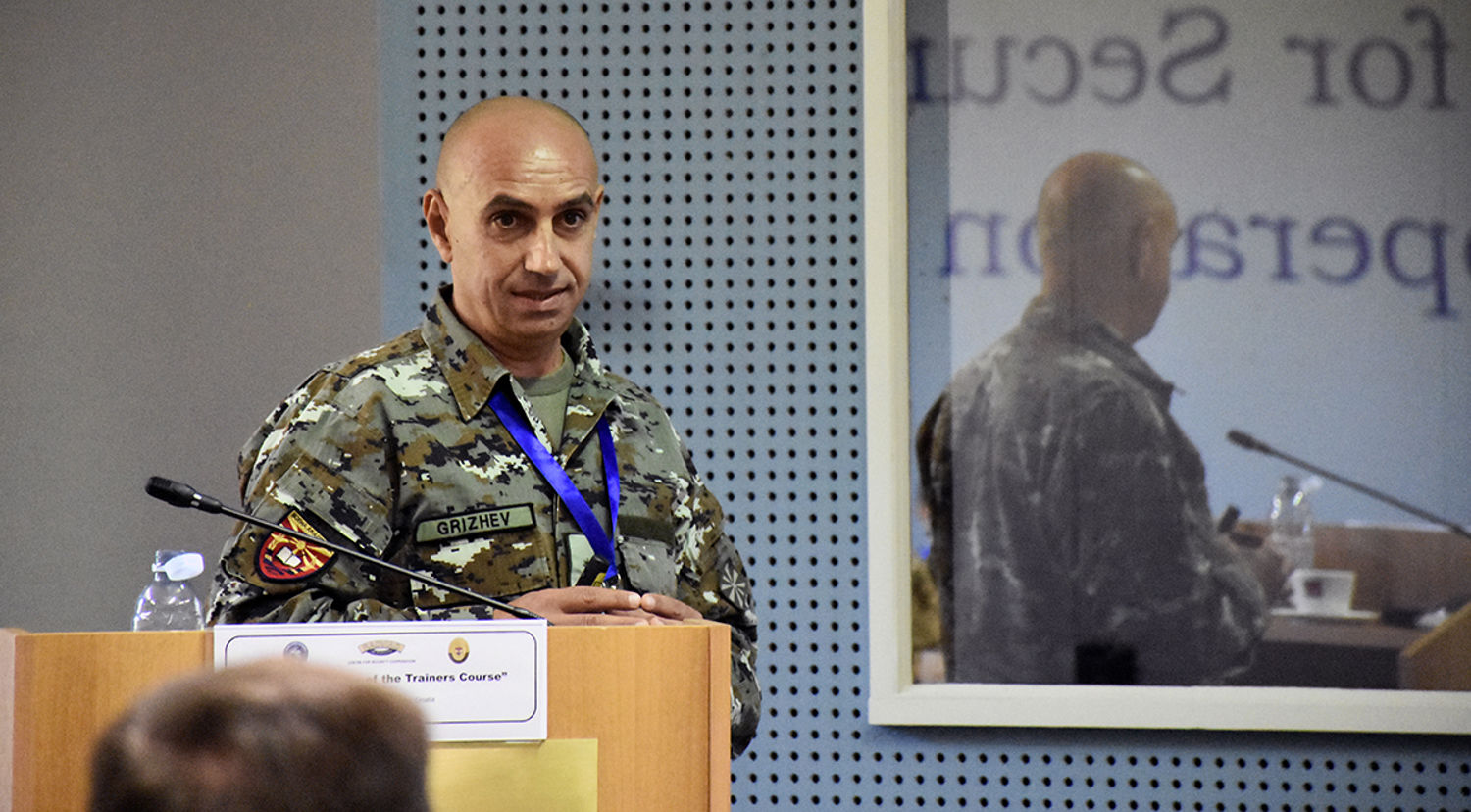
– For me, one of the strengths of the Gender Training of the Trainers course is exactly that combination: a NATO-quality framework, but delivered in a setting that encourages exchange, discussion and practical regional perspectives, says LtCol/Dr. Aleksandar Grizhev about the collaboration between NCGM and RACVIAC.
Photo: RACVIACTurn ideas into practical training
In his sessions Dr. Grizhev focuses on how gender perspectives become operational across NATO military operations, missions and activities.
– Rather than treating it as a separate topic, I look at how it can shape analysis, planning, conduct, reporting and assessment at the strategic, operational and tactical levels. As a syndicate leader, my role is then to help participants turn those ideas into practical training activities they can use in their own professional settings.
A network across South-East Europe
The collaboration between RACVIAC and NCGM started in 2014 and has been fruitful ever since.
– I think the collaboration between RACVIAC and NCGM makes a lot of sense because the two organisations bring different, but very complementary strengths. NCGM brings specialised expertise, NATO standards and a strong education-and-training framework in Gender in Military Operations. On the other hand, RACVIAC brings extensive regional experience, an established network across South-East Europe and, importantly, an environment where participants from different institutions and national backgrounds can work together very openly, says Dr. Grizhev.
The participants themselves are also seen as an important part of the process. They bring examples from their own armed forces and institutions, which helps test whether concepts really work outside the classroom.
– The pilot character of this year’s course is a good example. We can take established standards and experience, apply them with a diverse group, and then use what we learn to refine the course further. That is probably where the real value of cooperation lies: not simply delivering the same course together, but improving it together, says Dr. Grizhev.
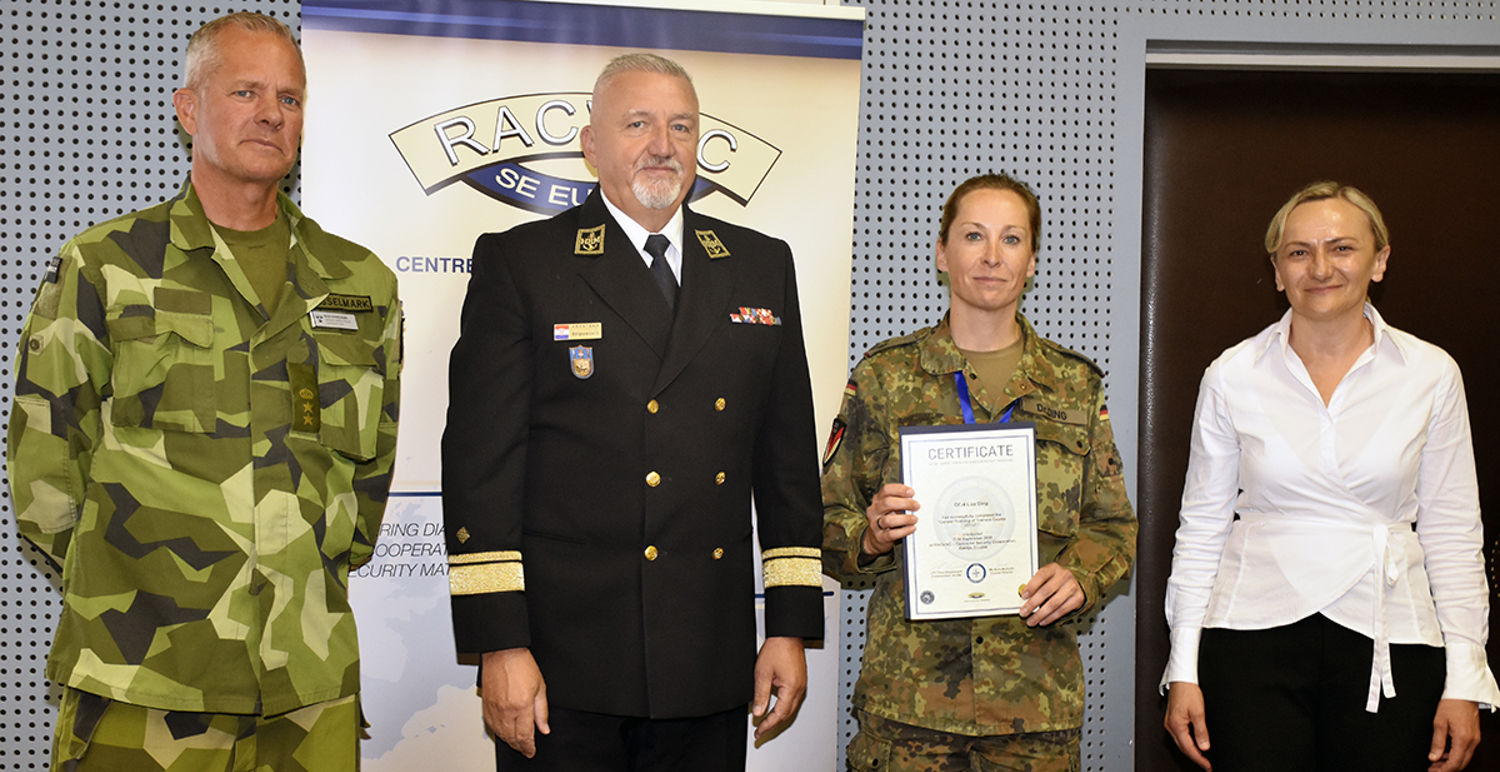
LtCol Olov Kesselmark (NCGM), R Adm Predrag Stipović (Deputy Director RACVIAC) congratulates student LtCol/Dr Liza Ding with course director Nura Mulavdić.
Photo: RACVIAC